My 1965 Allen Custom Organ
How I got it. What it is.
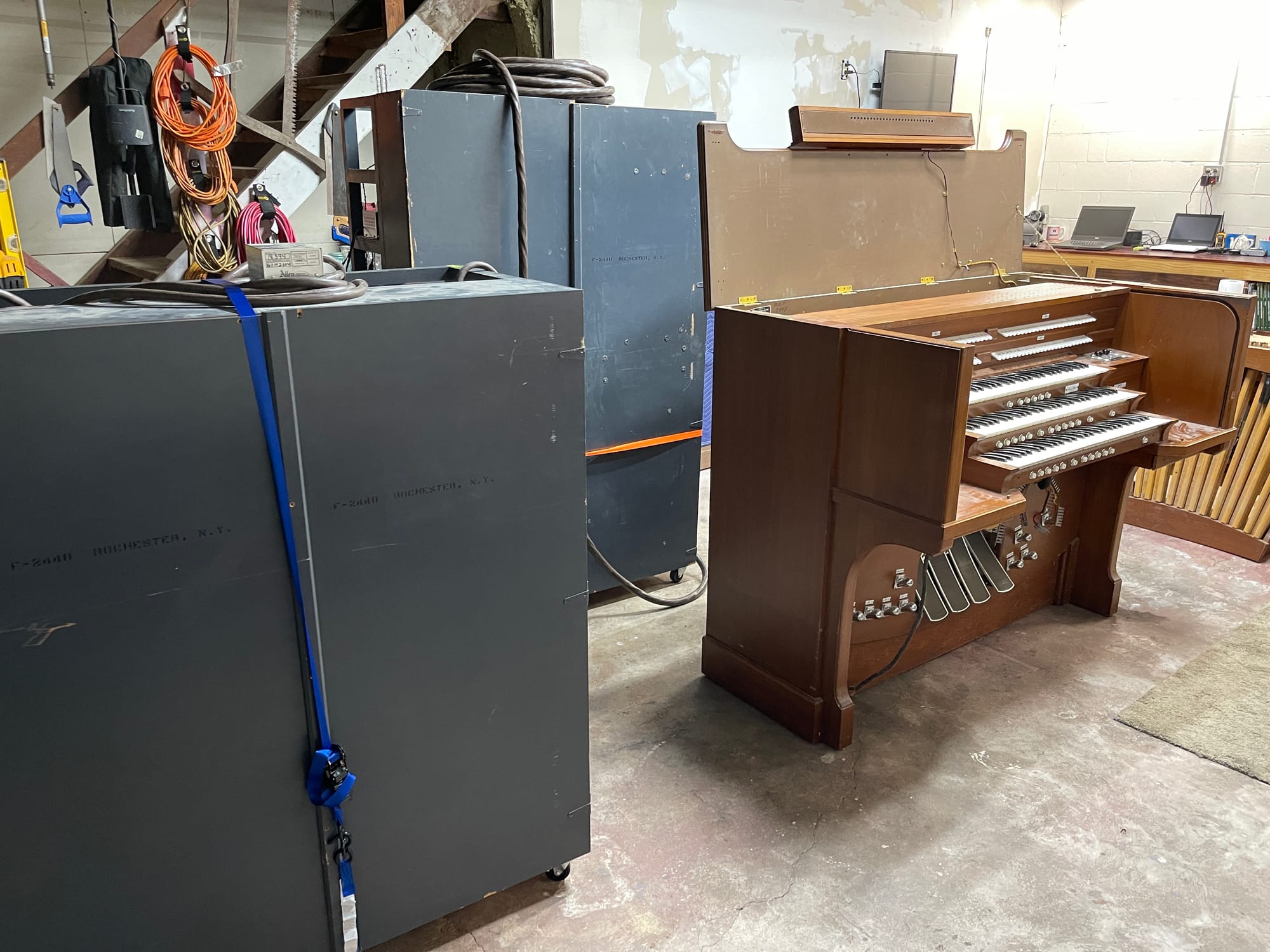
In September of 2023, I geared up with my brother-in-law and two friends with trailers to go up to Brighton and collect an organ that was going to the junk pile if I didn't rescue it.
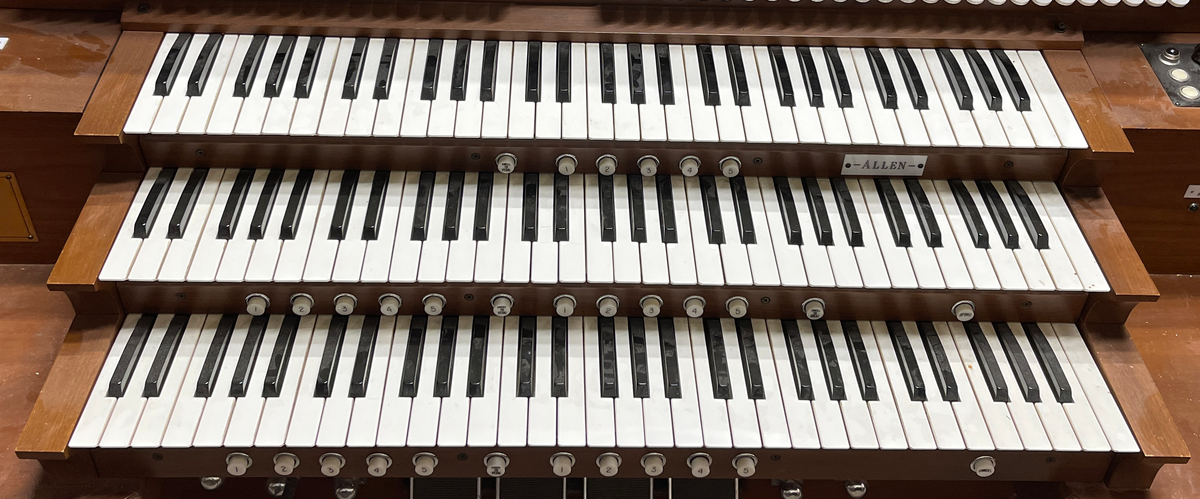
When I first saw it on Craigslist, I was confused. I recognized a three manual console well enough, and I knew that Allen made digital organs. But there were cabinets, and wires, and extra expression pedals. So, I put a question out on the Organ Forum, and got the answer back that this was an older, analog instrument, probably custom ordered for that church. Such instruments were being junked regularly, but I took a listen to one of a similar size on YouTube and thought that if I could get it home, it would be enough organ for me, even though it was a far cry from the 5-manual virtual organ I had hoped to build one day.
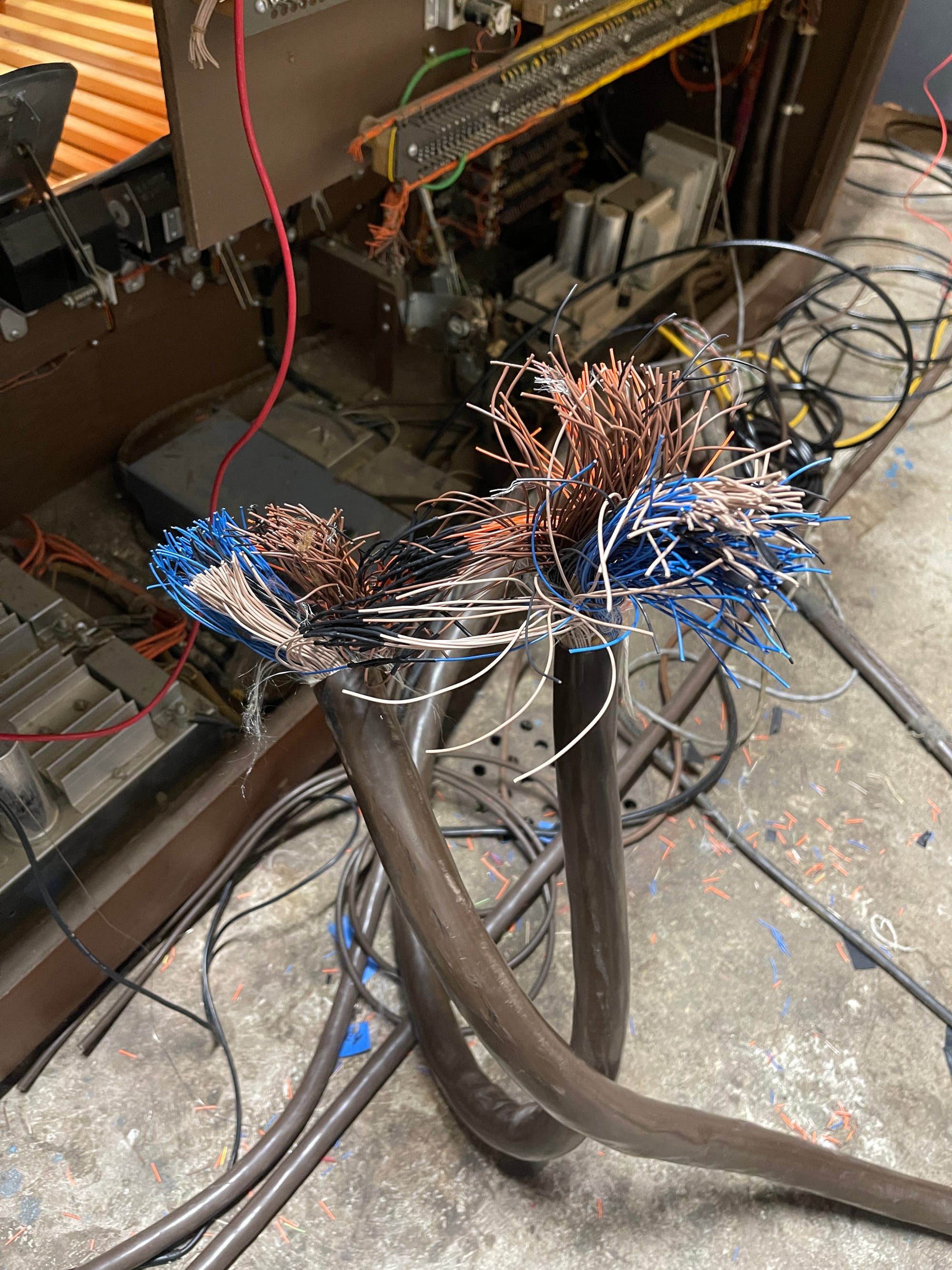
So, we got it home after dark on September 23, 2023, and I had a lot of learning to do. There was no manual as such for a custom-series instrument. The massive cables connecting console to the cabinets had been cut, and I didn't even really know if it was safe to turn on - had there been damage? Were the power supplies okay?
So, I dove into it with my multimeter, and a digital copy of the Allen Analog Training documentation, which is intended for maintenance technicians. It didn't explain that when you turn on the console, a specific wire going to each cabinet sends 12 volts of DC to them, activating an electromagnet that turns on power to the cabinet. Or that there was little to no color-coding in the cables.
Nevertheless, I began with the smaller Choir cabinet, got it to turn 'on', and then began the arduous process of re-assembling the large cables that connected everything back to the console. One wire per stop, one wire per key/pedal, with a large shared ground strap between them all.
I borrowed some stereo speakers from in the house, and within four days - including a bout with COVID-19, I had the first notes on the choir (bottom keyboard, smaller cabinet) playing. I would put small videos on YouTube showing some of the progress. In retrospect these sound awful, party because I didn't know how to get the best out of it, and partly because nothing had been tuned yet - yes, you have to tune this electronic organ!
Most of the wiring was fixed entirely by Christmas, and much of the tuning. I purchased a set of speakers - this organ has five audio channels, not a lot by today's standards, but not awful - and mounted them up on the walls.
By April things were humming along really nicely, although I have learned to add convolution reverb to my recordings, since my acoustically dull workshop does nothing for the quality of the sound.
Ever since, it has been a fix / maintain type situation. As old as it is, it really is pretty robust.
The main failures here and there have been capacitors, which are expected to drift and fail with age. I hope to put out a few more posts on the interesting design of the organ, and showcase what it is capable of - so much as my limited musical skill will allow.